Susanne Medas

What was the journey like to England with the train?
We travelled across Germany in sealed carriages. So from Prague via Nuremberg and through Cologne our carriages were sealed or locked. The Nazis knew that our train was full of mostly Jewish children. We were at risk. And I can remember that at one or two railway stations where the train had to stop, where trains always have to stop, we were threatened. They threatened us with their fists from the platform. “We can get you, we can catch you!”. And the big difference was, as many of us remember, even children younger than me when we came to the Dutch border. Venlo was the name of the little town where we crossed the border and the train stopped, the doors were unlocked. And there were women on the platform with huge jugs of cocoa and bananas and cake. And they greeted us kindly and we felt completely different. It was a feeling of – you can hardly describe it. I think we remember this, this short time in Venlo, more than the weeks or months in England.
Were there also many small children on this train?
There was a laundry basket in one of the coupés, like this laundry basket. It was kind of standing in the corner and suddenly the children sitting in the coupé heard crying. And they opened the basket and there was a baby in the basket. Just like Moses in the basket. And they took the baby out and it was a little baby and the mother of this baby must have somehow smuggled it onto the train at the last moment. And I heard that the girls who were in that coupé, they saw the child needed nappies. And in those days the boys still had the big handkerchiefs that the men used to have or the boys used to have or we all used to have. And this girl said, “Boys, hand over your handkerchiefs, because we have to put a nappy on the child.” And it’s possible that this particular baby was taken out at the Dutch border, because a few children stayed in Holland at the time. Unfortunately, that was bad for them, because a few months later Holland was overrun.
(Note from interviewer: Research discovered the child, a baby called “Ewald” emigrated at some time to Vancouver)
What was your life like in England, when you arrived?
So I was lucky. Of course I didn’t know English, we all didn’t know English. But there was something very funny, and that was that I should have come to the so called “Woodcraft” organisation, but my brother, who came to England before me, had found me a family in Cambridge. When people were offered to take in children they could not choose the age or sex, a girl or a boy. And it so happened that a young couple, they were still on their honeymoon offered to take in a child and I arrived in Cambridge. They saw I was no baby! It really wasn’t the right place for an adolescent girl of sixteen to be staying with these kind people. They wanted a baby. And I asked, because I was already an adolescent the Refugee Committee to move me somewhere else, it wasn’t a problem for me. I found a new home.
What happened to your parents?
Initially, until the outbreak of the war, i.e. between July and August, those two months, I received mail from my parents in Prague. But after the war broke out, that was no longer possible. And we knew that we couldn’t have any more contact with each other, but suddenly, in December ’39, I received a postcard from Oslo from my father. At first I couldn’t understand it at all, but later I heard that the Red Cross, either the Czechoslovakian or the Norwegian Red Cross, had the opportunity to bring politically endangered people from Czechoslovakia to Norway. They travelled, my parents even travelled by train via Berlin to Norway. Unfortunately, Norway was also occupied a year later. And my parents were then sent to Auschwitz, where they lost their lives.
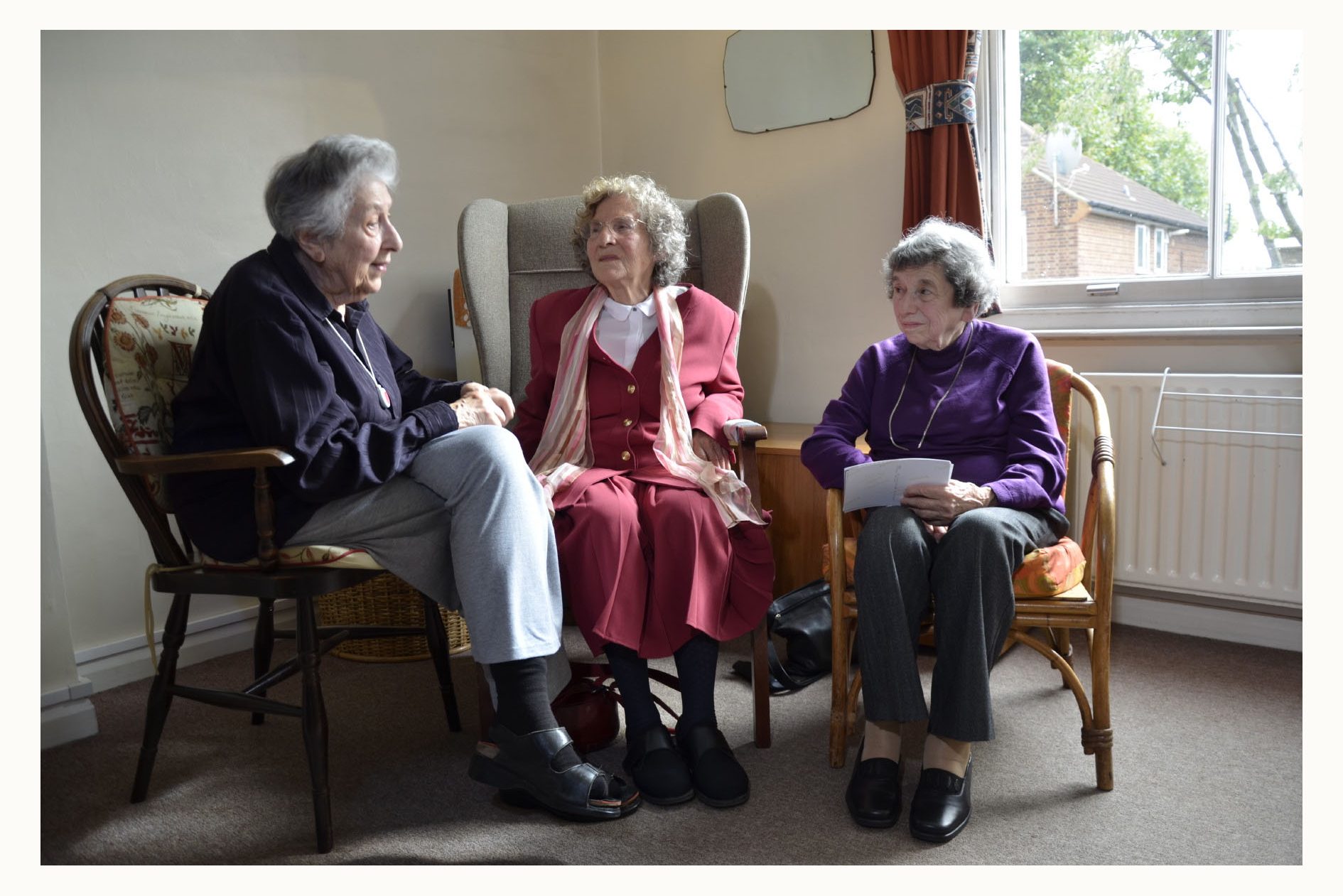
Photo : Wolfgang Burat
 James Pastouna