Eve
What was it like growing up in Prague, before the German occupation?
Well, I led a very sheltered life with my parents and brother in the centre of Prague,
Not very far from Wenceslas Square and my father was a lawyer and has some very interesting and wealthy clients and we were wealth off. We had skiing holidays and country holidays and we had a nanny and we were very comfortable.
Do you remember the road you lived in, the neighbourhood?
Yes, it would have been Prague 1 and the street was Lazaska and I think we were number 8 and we had a flat above my father’s office so that he could just come home upstairs and go down to work.
What was your family life like?
I loved my father very much. My Mother as well but my father was a very jolly, funny man who spoiled me and my brother. I just remember him showing me around the town and buying me sausages with lovely ‘Horcice’ which is mustard. I loved mustard and used to spread it on my bread, like other people spread jam.
And it was just a very happy life. I had lots of cousins. And Aunts and Uncles because my father as one of eight and they all had children so I always had someone to play with.
Your brother?
My brother was called Tomy (Pronounced: ‘Toe-me’) and he was 3 years older than me.
He was like a big brother then, cared for you
A big brother and a nice brother, always looked after me.
When were you aware of the German occupation?
It’s difficult to say but I would think probably Christmas 1938. And it was after Christmas, that I think, or perhaps it was after March when the Nazi’s came into Prague because I suddenly got an English tutor. I think he was a student who would take me out into the park and teach me a few rudiments of English like ‘Please’ and ‘Thank you’ and ‘Yes’ and ‘No’ and 1, 2, 3, 4, 5 just little things like that.
Why was that?
Well, that looking back on it was in preparation for me going to England. My parents must have thought they should try and get me out of Prague.
Just you or you and your brother?
Well, the plans were me first then my brother.
Why was that?
I don’t know, I don’t know except my father was a very principled so I was told, when I went back to Prague at the end of the war. And I think he thought that 2 children were more than his fair share of taking up places to go to England. I’m not sure about that but I imagine that’s what he was. I do know that I was supposed to come on an earlier train. On the June train, I think and it was postponed for July 1st because apparently someone needed it more than I.
I imagine it was someone who was in greater danger than I. I don’t know.
So you came over on July 1st
July the 1st, yes that’s right. That is the train.
When Czechoslovakia was occupied in March 1939, how did your family react?
They were very protective so they didn’t share their worries. And we were not really, my brother and I were not really aware that we were any different from anyone else. We were not practicing Jews. I never went to Synagogue. I don’t remember anyone else going to Synagogue. Though one cousin told me later, that he thought that he had been to Tomy’s Bar Mitzvah. I don’t know whether that’s true or not.
So, we were not aware that my father and Mother were at all anxious but then they probably were very protective.
Were you aware of been Jewish?
No, not at all.
Was there at the time in 1939 after March an outpouring of patriotism? For example the singing of the Czech National Anthem?
I think the Czechs have always been very patriotic, so I wouldn’t notice anything that changed. We were very patriotic. I really can’t remember but Czech patriotism was different from say English patriotism in that it wasn’t a question of we are better than anyone else because we were only a small country and we knew that we were but it was a beautiful country and we loved it and we loved the President who had died just recently before the war, Tomáš Garrigue Masaryk.
So when the Germans occupied in 1939, you were not really then aware of their presence. You were not afraid?
Well, I think we weren’t particularly afraid for our lives but I think that we felt outrage that someone else had come in. I don’t remember been afraid for my life or the other children’s lives. I was just afraid of Germany coming in (our country) uninvited and they came. I do remember them marching in.
Did you have to leave school or anything like that?
No, I didn’t. I went to the Lycée, the Lycée Français in Prague that served me well. Whether that made a difference or not I don’t know but I do know that when I was going to come to England, there were other children who also were coming either to England or to Sweden.
Although Kristallnacht was essentially in Germany and Austria. Did you have an inkling that something was amiss?
I didn’t. Well, I think I remember been told that it would not be wise to tell anybody that we were Jewish. I think, I remember that but I didn’t realise what, if anything was happening to Jews.
What do you think was the turning point when your parents decided that you and Tomy must leave?
I don’t know. I really don’t know why they decided unless the information came to them that there was someone willing to organise rescue trains for children.
Do you think that they (parents) tried to protect you so much that they didn’t want to tell you what was happening?
Yes, well I think they must have said ‘Well, you are going to England. Tomy will come later. I think they probably, must have said that there will be a war. That there would be trouble and you will be safer in England.
How did your parents get the chance that you could leave the country? How did this happen?
I suppose that they must have heard about Nicholas Winton been in Prague and that they were organising the Kindertransport and they must have gone to find out more, but I didn’t know till about June 1939 when I was given a place and then later, a week or two later I was told that someone needed it more than I did so I would go on the July train.
And concerning Sir Nicholas Winton you, found out years later he helped you and the other children leave.
I found out 50 years later. I thought it was the Quakers who had rescued me and the other children and it was not till 1988 or 1989 when the whole thing came to light about Kindertransport and Nicholas Winton’s part in it.
How did you find out about Sir Nicholas Winton?
I found out because I knew a Czech man who worked for the BBC and broadcast to Radio Prague and I had met him. And he just rang me up because he was in the ‘know’. I think he must have known Esther Rantzen and so on.
“That’s Life” (Name of programme).
“That’s life”, yes. That programme called “That’s Life.”
You must have been absolutely amazed to find out that this man had participated in your rescue.
Absolutely, absolutely, yes.
Do you remember the time, when your parents told you that you were going to England?
I can’t say honestly that I do. But I’m sure that they must have talked to me about it. And I think they must have talked to me about England. That it was cold and foggy and the men wore bowler hats and I think they probably gave me or told me to read Georg Mikes (Pron: Mikesch) who wrote about these funny English men and about England. So I knew a bit about England. Yes.
Why did you travel alone?
Why did I travel alone? I think that there was a scheme by which if you were younger than 8 you could travel with somebody else, who would be responsible for you. So I think there were some mothers and children but I was 8. I was a big girl. So that was it. I think big girls or big children travelled alone.
How did you feel, when you realised you were travelling alone, that your brother was not travelling with you? How did your brother react when he knew you were travelling separately?
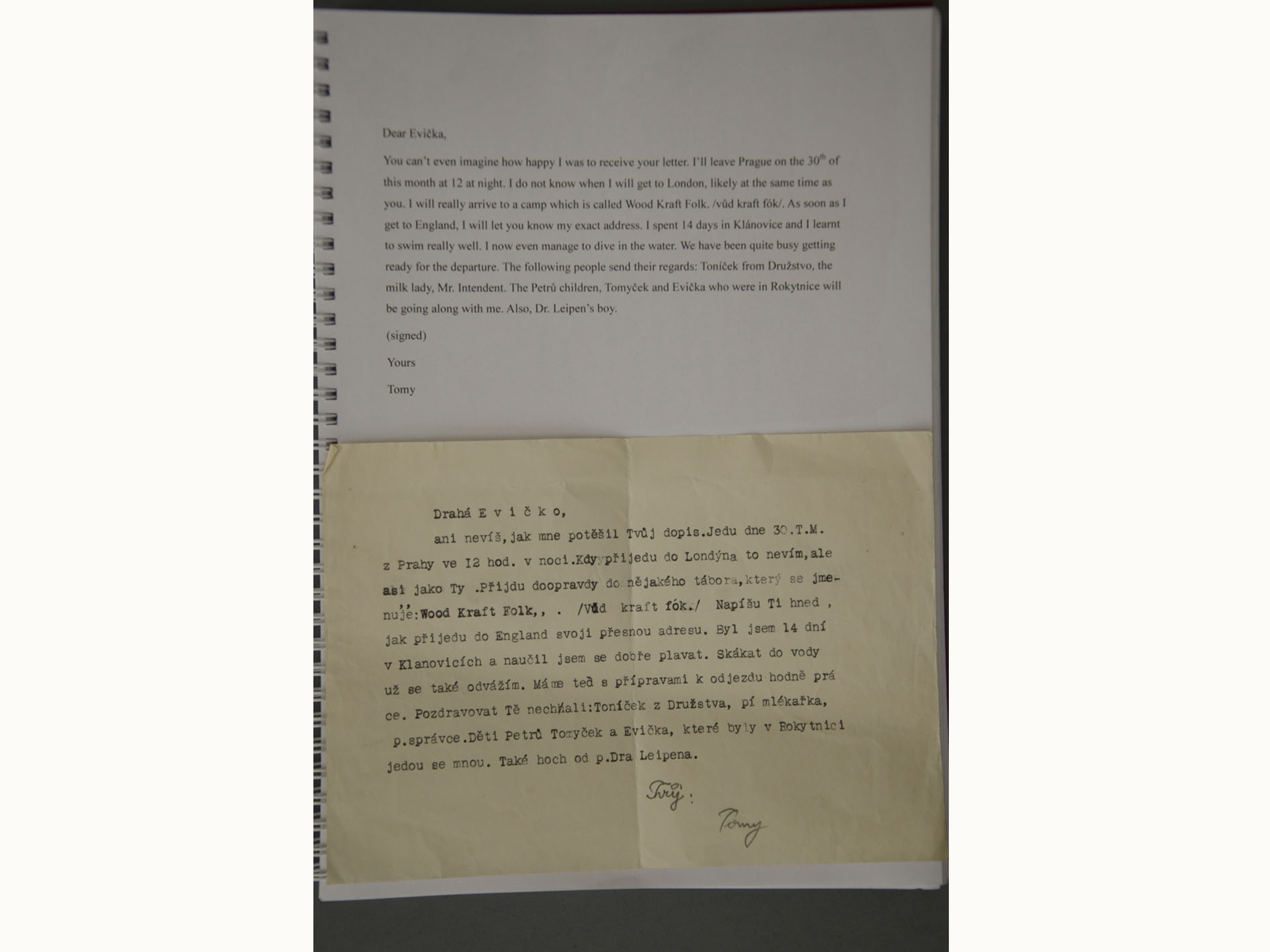
I think my brother was sad that he was not coming with me. In fact, I know he was because he wrote a letter saying that he wished, he was with me but I just went along with doing what everyone else was doing.
Do you remember been at the station?
Just about yes, with my father, mother and brother. Lots of people but I don’t remember feeling that I would never see them again, obviously. I thought that I‘d be back soon.
So you all went down to the station together?
Yes
Do you remember the journey itself?
I don’t remember an awful lot. I remember just one incident. Because, I was small for my age. I looked younger and one of the adults a lady coming into the carriage and looking at us all
And I was the smallest; she took me to the toilet. And I was outraged because I was quite old enough to go the toilet myself. And she held me over the toilet. That is what I remember the most.
Do you remember the preparation for England?
The preparation, yes. I remember buying clothes or been bought clothes, nice and warm wool clothes because it was going to be cold in England. And the English lessons, so that I would be able to say ‘My name is’ and ‘Thank you please’.
Do you remember on the train the other children, if there were any babies, those who looked after you?
I know that there were babies. But I think knew that later. I didn’t know anybody on that train because the friends in my class seemed to all go to Sweden and I was the only one to go to England. So I didn’t know anybody and I probably slept a lot because people remember incidents that I don’t. They remember going through Holland. The Dutch bringing bananas and chocolate and goodies. And I don’t remember that at all.
Do you remember when you arrived in England?
That I do remember. I do remember a big as I know now Liverpool Street Station hall. The arrival a very smoky, sooty, foggy I suppose and lots of people milling around. And the children been on one end the parents, foster parents been the other end. And your name was called out and you went to whoever was going to look after you.
That was the very first time you met Ms. Simmonds
Yes, yes. Before that.
My name was not called out till nearly the end. I was just getting a little bit worried and a lady, an English lady said ‘What’s your name’? And I said ‘Prager’ and she said ‘No dear, not where you come from! What’s your name’? So I had to repeat ‘Prager’.
And yes, that was when Ms. Simmonds to meet me.
And then what happened?
Then she, I think we went by taxi. I think, she must have hugged me .we went by taxi to St. Pancras presumably (Railway station London) and came up to Nottingham, where I was to stay with her.
Do you remember the first night?
I remember been given some bread, butter and jam and cocoa because I was falling asleep anyway. It was getting quite late. Finding it all very strange because it was so different from Czech bread but beyond that no, she just took me to bed and I slept.
Ms. Simmonds didn’t talk Czech and you could hardly talk English.
Well, she was a teacher, so she was very patient. And she happened to have a French dictionary and if we didn’t, I didn’t understand what she said or if she did not understand what I said in English, we went to the French dictionary. And because I had gone to the Lycée Français in Prague that served me well.
What sort of relationship did you have? Was it like mother and daughter?
Well, it did actually yes. I remember not calling her anything for the first week or so. And she took me to her school with her, where she taught. It would have been July, yes July. And before they broke up (School term finished). I asked her, if I could call her ‘Mummy’ because all the other children had a ‘Mummy’ so that was how it is.
So you had then a Mother Daughter relationship.
Yes, definitely.
Is that why you later became a teacher, because of her influence?
Yes
Did you work hard at school?
Yes, yes.
Did it take you long to learn English?
It didn’t take me long. By Christmas I had forgotten Czech and could only speak English, which seems strange but that is what happened.
Was it difficult to settle down?
Well, the first year, the first 2 years I was in the Primary School where she was. So it was not at all difficult because she was there if anything ‘untoward’ happened. That the children were very nice to me, very kind. So I was very happy there.
Did you have contact with other ‘Kinder’ from Czechoslovakia during the war?
No and yet it seems strange but less than a couple of miles away there was a boy from Prague and we didn’t know of each other’s existence at all. And when we’d finally meet at the Esther Rantzen show, we both said if we had been able to talk to each other we would not have forgotten our Czech.
Were you brought up in Christian household?
Yes, she was Christian. Not a regular church goer. But the first day I was there she took me around to next door but one neighbours where there was a little girl exactly the same age as me and she became like a sister and we went to church together or went to Sunday School together. She was already baptised and later, much later when I was about sixteen; when I was old enough to say yes or no, I was baptised as well.
During the time you were with Ms. Simmonds did you have contact with your family?
Yes, the first 4 years I heard from them or was it 3 years. I heard from them through the Red Cross. I have letters. They were necessarily very short letters from them telling me to be a good girl. To wash the back of my neck and to do what Ms. Simmonds asked me to do.
To behave myself.
Did they make light of their situation in the Czechoslovakia?
Yes, they did. Looking back no they just said that they had moved house at one point and just little details about neighbours and so on.
Do you remember the last letter your parents wrote to you?
I don’t, I don’t remember the last letter. I wasn’t aware that it was the last letter. But, I was aware that they stopped. The letters topped and I don’t think I realised what that meant but perhaps I did subconsciously.
Where you expecting your family to join you?
I was expecting Tomy and of course he was on the last train that never left Prague. But no I think, I knew that there would be no question of people coming from Czechoslovakia to England.
What happened, when you realised that your brother was not coming?
I was devastated, yes.
For the benefit of the listeners who don’t know. Why was he not able to leave?
He was not able to come as he was due to come on September 1st I think it was and the war broke out and the borders were closed and the children were taken off the train and told to go home.
When did you find out about what happened to your parents and brother?
About, it must have been maybe early 1946 after the war ended, I had a letter from an Aunt telling me what had happened to various members of my family. She had survived because she married an Aryan and the same happened to an Uncle. Otherwise they all perished in Auschwitz.
How did this news affect your life?
I don’t know but I do know that I was quite disturbed and went through a bad patch at school. The school was very understanding but I think that I probably stopped working and misbehaved a bit.
How often do you think of your parents and brother?
Most days.
Concerning Ms. Simmonds what happened when she got old?
I was teaching away from home obviously and decided that I would come home because she was getting rather frail. So the last 4 years of her life I was living with her and looking after her.
So it went full circle. She looked after you and you looked after her
Yes it was. It was like a full circle. I was glad to do it.
Going back again to the ‘last’ Winton train. You actually heard that all the children were actually sitting on the train.
Yes. That is what I heard yes. And that all perished that was what I was told but I think it’s been revised a little. I think that 1 or 2 people did escape the concentration camps.
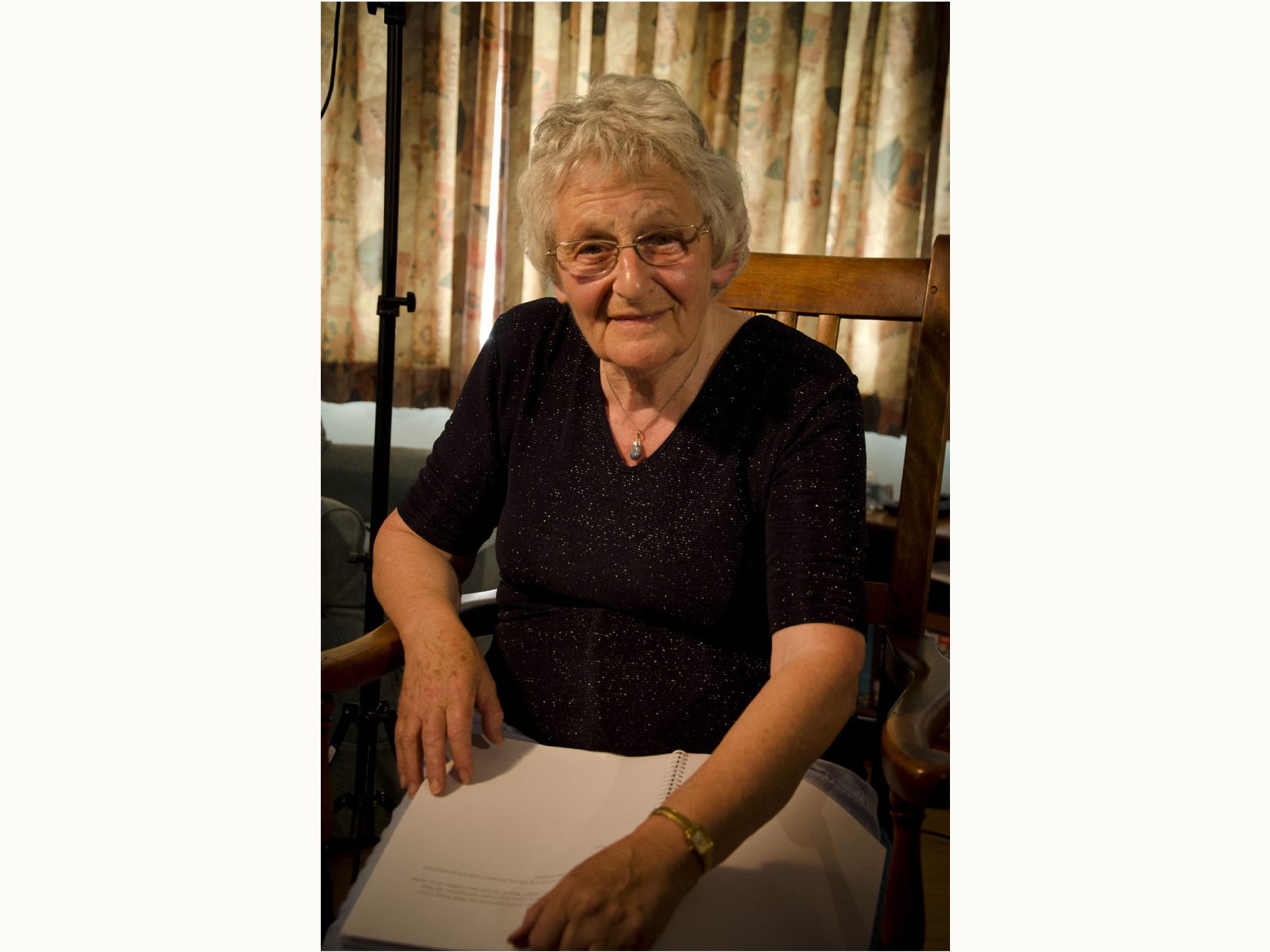
Photo : Wolfgang Burat
Click to enlarge
 James Pastouna