Rabbi Bernd Koschland
The children were from Germany, Czechoslovakia and Austria. They travelled to England because of Kristallnacht. (The Night of broken Glass 09.11.1938). After Kristallnacht many children came here to England. The Quakers (a religious movement) and other religious people spoke to the government. You have to do something, maybe not to save the elderly but at least the children. And the Parliament here then said that it would be okay for children to come here. And so, already after Kristallnacht, at the end of November 1938, the first Kindertransport’s left. The first one came here from Vienna on 1 or 2 December 1938.
Do you remember Kristallnacht?
We were asleep in bed when the SA and other people arrived. Out, out, out they shouted and they took us to the Square in the town of Fürth where men, women and children were already standing. And we were there all night, from about midnight to well past in the cold November. And what I remember, firstly it was cold, secondly I wasn’t entirely happy to be there. And at the back we saw the red, red light in the sky. Those were the synagogues in the city that were burning. Maybe there were also cries: stand here, do this, do that… But in the morning we were allowed to go home, that is, my mother, sister and I. My father and the other men were taken away. My father and the other men were taken away to a place in the city, a house in the city. And from there they were taken to Dachau concentration camp.
How old were you then?
Seven. I was very scared as a child. Not knowing what was going to happen, that we would stand there and have to stay there, with all the walking around. With screaming maybe and dogs, a gunshot here. It was very full of fear for me, I think, when I think back.
After Kristallnacht (the Night of Broken Glass), did your parents think “We must leave”?
Yes. My parents already thought that they had to leave Germany. They applied for a visa, I don’t know where to. My sister said for a visa, maybe they wanted to go to England, America – I don’t know. But unfortunately my father wasn’t there because he was in Dachau. When he came back, it was interesting why he came back so quickly, after 4 or 5 weeks in Dachau. Because a family friend got a visa for Paris and showed it and was happy and he came back. And then came the question, what should we do with the children? And the first thing was, we send the children to England, with the Kindertransport. And I was the first to go and then my sister two months later.
You remember leaving?
I left my father at the station and also my sister. There was a photographer who took a photo that she sent me. Unfortunately, I no longer have it. She was standing on the small ship and saw where the big ship was. But I no longer have it. And then I’m on the ship. And an interesting thing is that the ship belonged to American Lines and they allowed children on 2 or 3 of the big ships that regularly travelled from Hamburg to America. And there were 80 children on it. And we were at sea for 3 days, Hamburg – France Le Havre and then Southampton here in England.
But you weren’t allowed to travel to America.
No. No, I was only allowed to go to England and that was it.
The Americans did not issue visas to us. The thing is, in 1938 the Évian Conference took place in Europe to discuss the refugee situation. What can be done? Nothing happened, nothing happened from that. Just talk, talk and talk. America had a quota, i.e. only 400 or 500 were allowed to go over. Palestine was out, nobody could go there. Only maybe Dominican Republic in South America allowed people to go there. But the other thing was like this and this is perhaps a bit strange: England no – but many people came to England, that is, parents ”37, ’38, ’39 came here. As long as they had someone to guarantee that they didn’t want anything from England. But children, of course, could come on a Kindertransport.
The last thing I can remember about my mum was that she went to Hamburg with me. She went on the ship, she then went on a small boat that sailed around us. And there was a photographer there and she sent me the photo with a little ring drawn round, where she was. But I don’t have the photo, that was the last time I saw her.
She thought, life would be better for me in England than in Germany. For me as a little kid to see something new and I left. The interesting thing is that they promised me we will meet with you again. When? Maybe it will come. That was promised, but it was never
You know, my mum and dad both said that I was going to England, that it would be better for me there. And that they’ll meet up with me again soon. That’s the last thing I can remember. That they promised, like many other parents promised their children, but it never happened.
The war started and that was the end of the parents never seeing their children again.
I am now standing next to a picture of my parents and me as a little boy and a photo of my father in Dachau.
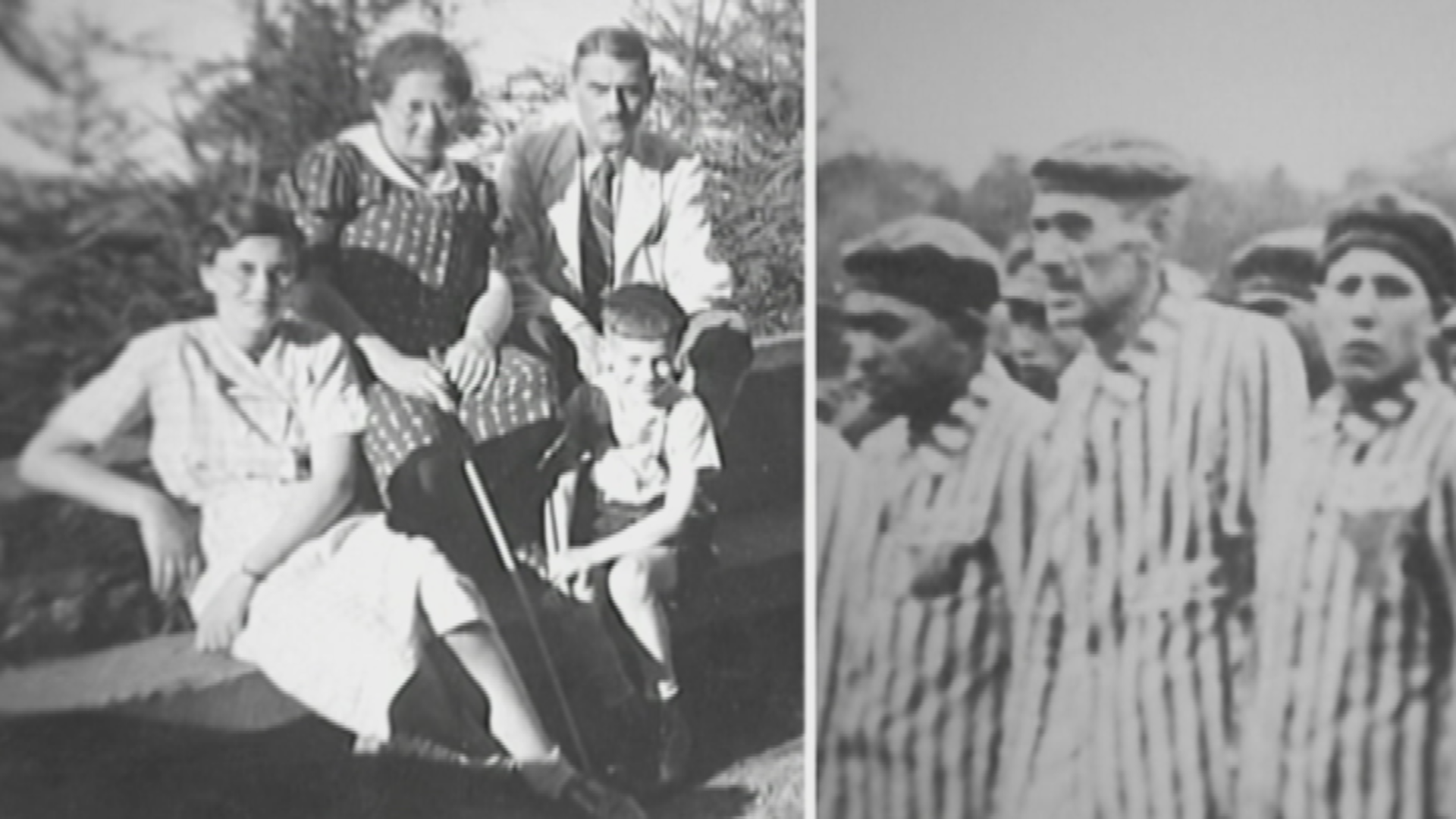
Why was my father in Dachau? It goes back to Kristallnacht, when we were taken out of the house. We had to stand in the cold all night, from about 1 o’clock, 2 o’clock in the morning, I don’t know, till well into the morning hours. Then we came back home again without father. The men were taken away to Dachau. When we got home, where is my Dad? As a child I’m thinking, of course – where’s Daddy? What happened to him? Of course it was very difficult without a father. He came back home from Dachau after 4 or 5 weeks. Maybe he didn’t look as good as he used to. The picture I’m standing in front of, I was in Israel in Yad Vashem I went in and happened to see this picture.
I was looking at pictures of Kristallnacht and suddenly I saw this picture, it was my father, the third person on the left. That’s my father, I still had to look at the picture three, four, five times. And I told my friends who were with me: I’ve just seen my father in the picture. At first I couldn’t understand, it was very difficult. But I asked my sister when I got the picture of Israel. Yes, that’s our father, she wrote to me. She recognised him. And this is the picture that hangs on the wall here.
 James Pastouna